Knowledge
Security is not only the future value of YSMETER, but also the core interest that YSMETER brings to customers
Sep. 03,2026
Share:
Choosing an industrial high performance butterfly valve is not simply a matter of selecting a valve size and pressure class. The valve must work reliably with the actual process conditions: the fluid being handled, temperature range, differential pressure, operating frequency, required shutoff performance, and method of actuation.
For industrial fluid-control projects, YSmeter provides a range of valve solutions. Its butterfly valve series can be used as a starting point when a project requires a more detailed review of butterfly valve construction and application suitability.
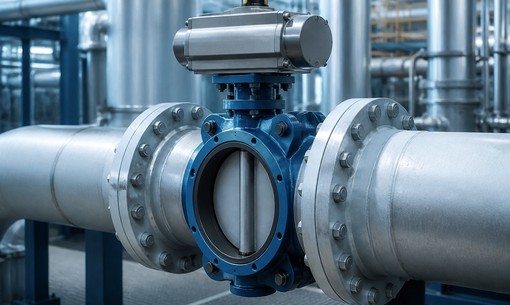
A standard concentric butterfly valve is often suitable for relatively moderate utility duties. However, when process conditions become more demanding, engineers may need to consider a high performance design with an offset disc and shaft arrangement.
The purpose of an offset design is to reduce unnecessary contact between the disc and seat during opening and closing. This can help reduce friction, limit seat wear, and support more stable operation in applications involving higher pressures, elevated temperatures, frequent cycling, or more challenging media.
That said, “high performance” is not a universal performance guarantee. Actual suitability depends on the valve’s documented design, seat material, pressure-temperature limits, body and disc materials, and the conditions of the specific installation.
The most reliable selection process begins with the duty conditions. Before comparing models, collect the information that defines how the valve will operate in the pipeline.
For example, a valve handling clean cooling water may have very different requirements from one used for hot oil, steam-adjacent service, corrosive chemicals, abrasive slurry, or gas isolation. Even when the nominal pipe size is the same, the correct materials, sealing arrangement, torque requirement, and actuator configuration may differ substantially.
Key questions include:
What is the medium, and does it contain solids, corrosive components, or abrasive particles?
What are the normal, minimum, and maximum operating temperatures?
What pressure and differential pressure will the valve experience?
Is the valve used mainly for isolation, throttling, or frequent control duty?
How often will it cycle during normal operation?
What leakage, shutoff, and safety requirements apply to the project?
This information gives the technical team a practical basis for reviewing the valve against the operating duty rather than relying on a broad product category alone.
The seat is one of the most important parts of any butterfly valve selection. Its material affects temperature capability, chemical compatibility, shutoff performance, and service life.
For lower-temperature and general industrial applications, resilient seat materials may be appropriate where compatible with the medium. In higher-temperature or more demanding process conditions, projects may require alternative sealing arrangements and a review of metal components, seat design, and applicable standards.
Material selection should also consider the full wetted path. The valve body, disc, stem, seat, and fasteners may all need to withstand the process environment. Corrosion is not always caused by the main fluid alone; cleaning chemicals, condensate, external atmosphere, and intermittent operating conditions can also affect valve life.
When the medium contains solids or has erosive properties, the expected flow velocity and valve position during operation should be reviewed carefully. A valve that performs well for on-off isolation may not be the best option for continuous throttling under abrasive service.
Pressure and temperature should not be evaluated as separate numbers. The allowable operating range of a valve can change according to the selected materials and sealing configuration.
A datasheet review should confirm whether the intended operating point falls within the valve’s documented pressure-temperature envelope. It is also important to identify transient conditions, such as pressure surges, start-up temperatures, shutdown conditions, or cleaning cycles, rather than considering only normal operation.
For control applications, flow conditions matter as much as pressure rating. The valve needs to provide usable control across the required flow range without creating excessive noise, vibration, cavitation risk, or unstable control behavior. Actuator sizing should be based on the required operating torque under the real process differential pressure, not only on nominal valve size.
A high performance butterfly valve may be appropriate when a basic concentric design does not provide the required operating margin. However, it is not automatically the right choice for every industrial line.
A wafer butterfly valve, for example, can be a practical option for many compact isolation and utility applications where the process conditions match its design limits. The wafer butterfly valve guide provides useful context for comparing installation style and application considerations.
For more severe duties, a project may also evaluate triple-offset butterfly valve designs. These are typically reviewed where the required sealing performance, temperature range, pressure conditions, or process criticality exceed the scope of simpler butterfly valve configurations.
The comparison should be based on documented requirements, including:
| Selection factor | Why it should be reviewed |
|---|---|
| Process medium | Determines compatibility with body, disc, stem, and seat materials. |
| Pressure and temperature | Confirms the valve operates within its approved duty envelope. |
| Isolation or control duty | Influences disc design, flow performance, and actuator selection. |
| Cycling frequency | Helps assess seat wear and long-term operating reliability. |
| Connection and installation | Ensures compatibility with flange type, space, orientation, and piping loads. |
| Fail position and control signal | Defines actuator, accessories, and safety-function requirements. |
A complete enquiry helps avoid unsuitable comparisons and reduces revision time during technical review. Along with valve size and quantity, provide the medium, pressure, temperature, flow conditions, piping connection, operating mode, and preferred actuation method.
If the valve is part of a controlled process, include the control signal, required fail position, available air or power supply, and any project standards or inspection requirements. For critical applications, the project team should also clarify testing, certification, traceability, and documentation expectations before final selection.
YSmeter’s broader industrial valve portfolio can help teams review related equipment categories. For application-specific support, contact the YSmeter engineering team with the process data and project requirements needed for a technical assessment.
More News