Knowledge
Security is not only the future value of YSMETER, but also the core interest that YSMETER brings to customers
Jun. 19,2026
Share:
High-pressure processes require control valves that can regulate flow accurately while withstanding severe mechanical stress. For these applications, engineers often need specialized control valve solutions rather than standard valve configurations.
High-pressure service is common in chemical processing, power generation, petrochemical units, oil and gas systems, and other industrial facilities where pressure drop, erosion, vibration, and sealing difficulty can become major challenges.
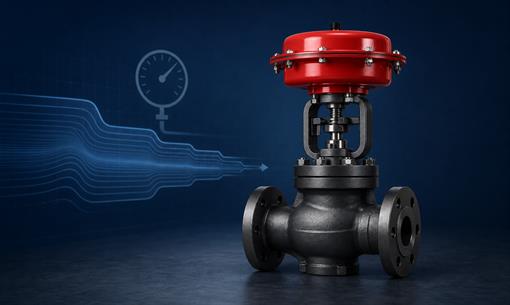
When pressure differential is high, the valve trim may experience strong fluid forces, high velocity, noise, vibration, cavitation, flashing, or erosion. These conditions can reduce control accuracy and shorten valve life.
The actuator must also provide sufficient force to position the valve reliably under changing process conditions.
Correct sizing is essential for high-pressure applications. An oversized valve may operate too close to the seat, creating unstable control and accelerated wear. An undersized valve may fail to deliver the required capacity.
Engineers should evaluate normal, minimum, and maximum operating conditions before selecting a high-pressure valve.
High-pressure applications may require pressure-balanced trim, cage-guided structures, hardened materials, multi-stage pressure reduction, or special sealing designs.
For severe pressure conditions, high-pressure flow control applications may benefit from engineered trim designed to improve stability and reduce wear.
The actuator must be matched with valve size, pressure drop, shutoff requirements, and control signal. Pneumatic actuators are common in many process plants, while electric or hydraulic actuators may be used when site conditions require them.
Positioners and feedback devices can improve control accuracy, especially when the valve operates under variable pressure conditions.
High-pressure control valves are used in steam control systems, reactor feed lines, high-pressure water systems, compressor stations, and demanding chemical processes.
In power generation applications, reliable pressure control can help improve plant stability and protect downstream equipment.
High-pressure control valves require careful attention to sizing, trim design, materials, actuator force, and maintenance planning.
To evaluate a high-pressure valve for your project, visit our Product Center or Contact Us page.
More News

RELATED PRODUCTS
Security is not only the future value of YSMETER, but also the core interest that YSMETER brings to customers

YSIQ(D)60 Intelligent Single-Seat Angle Control Valve
The valve features a modular design with strong universality and interchangeability, offering a compact structure.
View More
YSIQ(D)70 Intelligent High-Pressure Control Valve
The YSIQ(D)70 series pneumatic/electric intelligent high-pressure control valves feature a unique design and special hardening treatment
View More
YSIQD Cryogenic Pneumatic Control Valve
YSID10/20 Series Pneumatic/Electric Intelligent Cryogenic Control Valves: These valves are a National Torch Plan Project of 2010 and hold a number of national patents.
View More
ZZYP Self-Operated Pressure Control Valve
The ZZYP series self-operated pressure control valve is an actuator product that requires no external power source
View More