Knowledge
Security is not only the future value of YSMETER, but also the core interest that YSMETER brings to customers
Jun. 15,2026
Share:
Cavitation is one of the most damaging conditions in liquid control applications. Even well-designed control valve solutions can suffer premature wear if pressure drop, flow velocity, and valve sizing are not properly evaluated.
Cavitation occurs when local pressure inside the valve drops below the liquid vapor pressure, forming vapor bubbles. When pressure recovers downstream, these bubbles collapse violently and can damage the valve trim, body, and downstream piping.
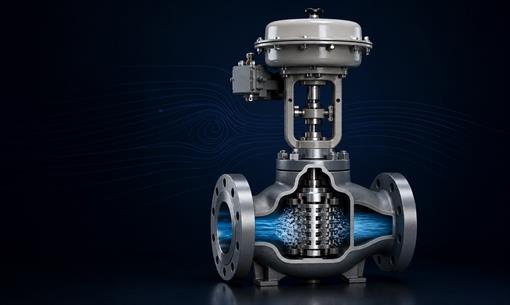
Typical symptoms include loud noise, vibration, unstable flow control, trim erosion, reduced shutoff performance, and frequent maintenance requirements.
If cavitation is ignored, the valve may lose control accuracy and eventually require replacement of trim components or the complete valve assembly.
Cavitation is usually related to excessive pressure drop, high flow velocity, improper valve sizing, unsuitable trim design, or process conditions that change beyond the original design range.
An oversized valve may operate at a very small opening, increasing velocity through the throttling area. An undersized valve may force excessive pressure drop through the valve, also increasing cavitation risk.
Accurate sizing is one of the most effective ways to reduce cavitation. Engineers should evaluate maximum, normal, and minimum flow conditions rather than sizing the valve for only one operating point.
For applications involving large pressure drops, a cage-guided control valve design may help improve flow stability and reduce damaging pressure recovery effects.
Anti-cavitation trim can divide the pressure drop into multiple stages, reducing vapor bubble formation and collapse intensity. This type of engineered trim is commonly used in severe liquid service.
Material selection is also important because cavitation can accelerate erosion. Hardened trim materials may improve durability in demanding applications.
Sometimes cavitation is not caused by the valve alone. Pump operation, pipe layout, upstream pressure, downstream restrictions, and process temperature can all influence cavitation risk.
Industries such as fine chemical processing often require careful review of media properties and operating conditions before selecting a valve.
Reducing cavitation requires proper valve sizing, suitable trim design, correct materials, and a clear understanding of process conditions.
For severe liquid service or high-pressure drop applications, visit our Product Center or Contact Us page for engineering support.
More News