Knowledge
Security is not only the future value of YSMETER, but also the core interest that YSMETER brings to customers
Jun. 17,2026
Share:
Leakage is a common control valve problem that can affect process efficiency, safety, and environmental compliance. Reliable control valve solutions should be selected, installed, and maintained with shutoff performance in mind.
Control valve leakage can be divided into internal leakage and external leakage. Internal leakage occurs through the seat when the valve is closed. External leakage occurs around packing, gaskets, flanges, or body joints.
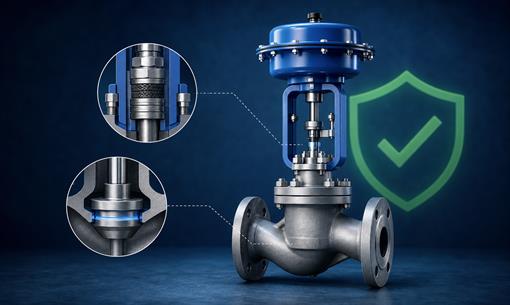
Internal leakage is often caused by seat wear, damaged sealing surfaces, foreign particles, incorrect trim material, erosion, corrosion, or insufficient actuator force.
In throttling service, the valve seat and plug may experience continuous wear. If the valve is frequently operated near the closed position, the sealing area can degrade faster.
External leakage may occur around stem packing, bonnet gaskets, or flange connections. It can be caused by thermal cycling, vibration, improper installation, gasket aging, or inadequate bolt tightening.
For hazardous, corrosive, or high-temperature media, external leakage can create safety and environmental risks that require immediate attention.
A valve may leak if the actuator does not provide enough closing force or if the positioner is incorrectly calibrated. Air supply problems, worn actuator components, or incorrect spring settings can all affect shutoff.
In applications requiring stable shutoff and modulation, an engineered control valve with actuator should be evaluated as a complete assembly.
Leakage testing helps verify whether the valve meets the required shutoff class. Testing methods may vary depending on valve type, pressure rating, media, and applicable standards.
Regular inspection and testing are especially important after maintenance, trim replacement, or changes in process conditions.
To reduce leakage risk, select proper trim materials, avoid oversizing, maintain clean pipelines, verify actuator calibration, inspect packing regularly, and replace worn sealing components promptly.
For demanding shutoff requirements, a pressure-balanced control valve configuration may help improve stability under certain operating conditions.
Control valve leakage is often preventable when the valve is properly selected, installed, tested, and maintained.
If you are replacing leaking valves or reviewing shutoff performance, visit our Product Center or Contact Us page.
More News